
Can Cold Water Really Stop Red Hair From Fading?
Analyzing the physics of cuticle contraction reveals exactly how cold water preserves red dye molecules and why it isn't a standalone cure for color loss.

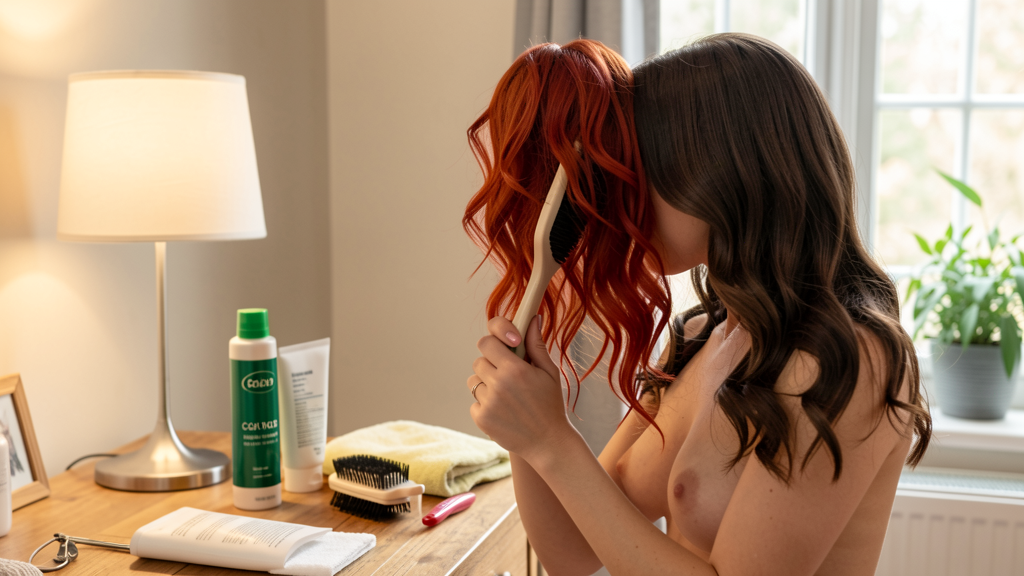
There is a specific kind of heartbreak reserved for those who dye their hair red. You walk out of the salon with a shade that can only be described as "electric fire," feeling like a main character, only to watch it dissolve into a washed-out copper or dull strawberry blonde within three washes. The internet is flooded with desperate remedies, but the most persistent piece of advice is also the most uncomfortable: rinse with ice water.
We need to be realistic about what your shower temperature can actually achieve. While turning the handle to "Arctic Blast" isn't a miracle cure that locks dye in permanently, the advice is rooted in legitimate trichology. To understand why, we have to look past the folklore and examine exactly what happens to the hair shaft when hot water hits it, and why red molecules are the first hostages to escape.
The Physics of the Cuticle Layer
To grasp why temperature matters, we have to visualize the hair structure. Your hair is comprised of an inner cortex, which holds the pigment, and an outer layer of overlapping scales called the cuticle. Think of these scales like the shingles on a roof. When they lie flat and tight, the roof is watertight. When they curl up or lift, the interior is exposed to the elements.
Hot water acts as a thermal agent that causes these cuticle scales to swell and lift. This is why hot water is excellent for cleansing—it opens the pathways to remove dirt and excess oil—but it is disastrous for color retention. When the cuticle lifts due to heat (water above 100°F or roughly 38°C), the artificial red pigment molecules sitting inside the cortex have a clear exit path. They leach out into the water and swirl down the drain.
Cold water does the exact opposite. It triggers thermal contraction. The cold temperature forces the cuticle scales to constrict and lie flat against the hair shaft. This "sealing" effect creates a physical barrier that traps the dye molecules inside the cortex and prevents water from penetrating deeply enough to wash them away. It is not a permanent chemical bond, but a mechanical closure that significantly reduces the rate of color loss during the act of washing.
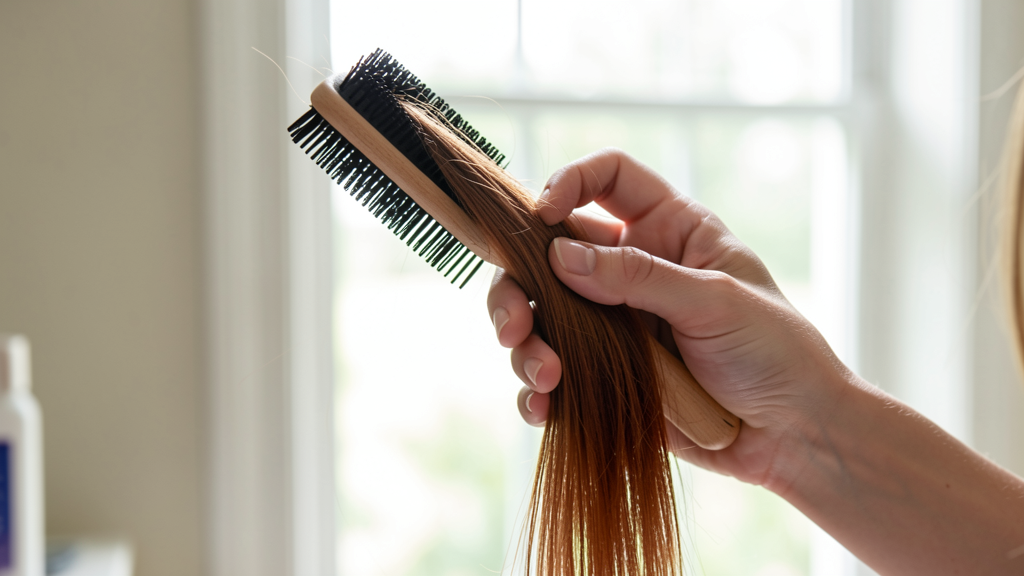
Why Red Pigment Is the Hardest to Retain
You might wonder why brunettes and blondes don't seem to obsess over water temperature quite as much as redheads do. The issue lies in the size and stability of the dye molecules themselves. Red dye molecules are physically larger than those of many other shades, yet they are notoriously unstable.
To achieve a vibrant, fashion-red result, the hair often has to be lightened first. This lifting process compromises the hair's integrity, creating a more porous structure. Even if the cuticle is closed, a highly porous hair shaft acts like a sponge with holes in it. However, the larger problem is the fading trajectory. When hair color fades, it doesn't just become lighter; it reverts to the underlying pigment. When red fades, it exposes the yellow and orange pigments that were hidden underneath, turning that vibrant ruby into a dull rust much faster than a brunette fade looks brassy.
Because the red molecules are essentially sitting precariously in a compromised cortex, anything that agitates the hair—like high heat or harsh surfactants—dislodges them. This is where the cold rinse provides its most tangible benefit. It minimizes the internal turbulence of the hair shaft during the washing phase. If you are struggling with the underlying warmth peeking through too soon, you might be facing a similar issue to Why Toner Turns Hair Gray on Ash Blondes, where the balance of pigments is upset by environmental factors.
The Cumulative Effect of Heat Exposure
A common misconception is that one cold rinse will reverse weeks of fading. Conversely, many believe that if they wash with hot water once, the color is ruined. The reality is about cumulative exposure. Every time you blast your hair with hot water, you are incrementally swelling the cuticle and allowing a microscopic amount of dye to escape.
If you wash your red hair three times a week with scalding water, you are actively accelerating the fading process three times a week. Over a month, that is twelve significant opportunities for color loss compared to twelve opportunities for retention if you had used cooler water.
However, there is a physical limit to this. Once you step out of the shower and blow-dry your hair, you are applying heat again. If you use hot tools on a high setting, you are essentially re-opening the cuticle that you just worked so hard to close with your cold rinse. The cold water strategy is effective only insofar as it protects the hair during the washing phase. If you follow a freezing rinse with a 400-degree flat iron session without protection, the water rinsing benefits are largely negated.
Water Quality and the "Slip" Factor
There is a secondary, often overlooked benefit to cold water that has nothing to do with the cuticle: it reduces the "slip" of the hair. Hot water strips away the natural sebum and conditioning agents very quickly. Cold water is less efficient at dissolving oils, which means it leaves more of your natural protective oils and the conditioner on the hair shaft.
This creates a smoother surface. When hair is rough and stripped (the result of hot water), it creates friction against itself. Friction leads to physical wear and tear on the cuticle, causing chips and cracks where color can escape. By smoothing the surface, cold water reduces mechanical friction. This is particularly vital if you live in an area with hard water. Hard water minerals, like calcium and magnesium, love to latch onto porous, rough hair. They build up and create a dull, chalky film that makes red hair look muted. We have seen this issue frequently in our guide on Keeping Pastel Pink Vibrant for 3 Weeks on Hard Water, and the same logic applies to red.
Cold water doesn't stop mineral deposits, but by smoothing the cuticle and leaving conditioners behind, it makes it harder for those minerals to latch onto the rough edges of the hair shaft.
Implementing a Realistic Thermal Routine
I am not going to suggest you stand in a freezing shower for twenty minutes. That is miserable and frankly unnecessary. The most effective protocol for red hair maintenance involves a gradient of temperatures.
You can wash and condition your hair with lukewarm water—cool enough to be comfortable but warm enough to emulsify your cleansers. The critical moment is the final rinse. After you have rinsed out your conditioner, switch the tap to as cold as you can tolerate for just thirty seconds. Focus this cold blast on the mid-lengths and ends, avoiding the scalp if the shock gives you a headache. This final blast snaps the cuticles shut, locking in the moisture from the conditioner and trapping the dye molecules before you step out.
To take this a step further, consider using a weekly treatment that actively seals the cuticle. A clear gloss is an excellent tool for this. It adds a protective layer over the cuticle that is more resistant to temperature changes than natural hair alone. If you are unsure how to apply this without a stylist, our guide on Step-by-Step: Applying a Clear Gloss at Home for Shine offers a practical method to boost that seal.
The Verdict on Temperature and Longevity
So, does cold water stop fading? No. It slows it down. It is a damage-control measure, not a preservation chamber. It helps you win the battle against the drain, keeping those precious red molecules on your head rather than in the pipes.
But the honest truth is that water temperature is only one variable in the equation of red hair maintenance. If you are rinsing with ice water but using a clarifying shampoo every day or brushing your hair aggressively while wet, the cold water isn't going to save you. The real secret isn't just the temperature of the water, but the reduction of all the other aggressors that try to pry that cuticle open. The cold rinse is your shield, but you have to stop swinging the sword (high heat and harsh chemicals) at yourself for the shield to actually work.
Read next
The 3-Week Pink Protocol: Counteracting Hard Water with Color-Depositing Conditioners
A specific routine using diluted direct dyes to stop pastel pink hair from turning muddy and orange in high-mineral water.
Step-by-Step: Applying a Clear Gloss at Home for Shine
Restore the salon-grade sheen to your matte, color-treated hair with this precise, non-pigment glossing protocol designed to seal the cuticle.