
Do You Really Need to Wash Low Porosity Hair Less Often?
Why your washing schedule should depend on saturation levels rather than calendar days for low porosity hair.

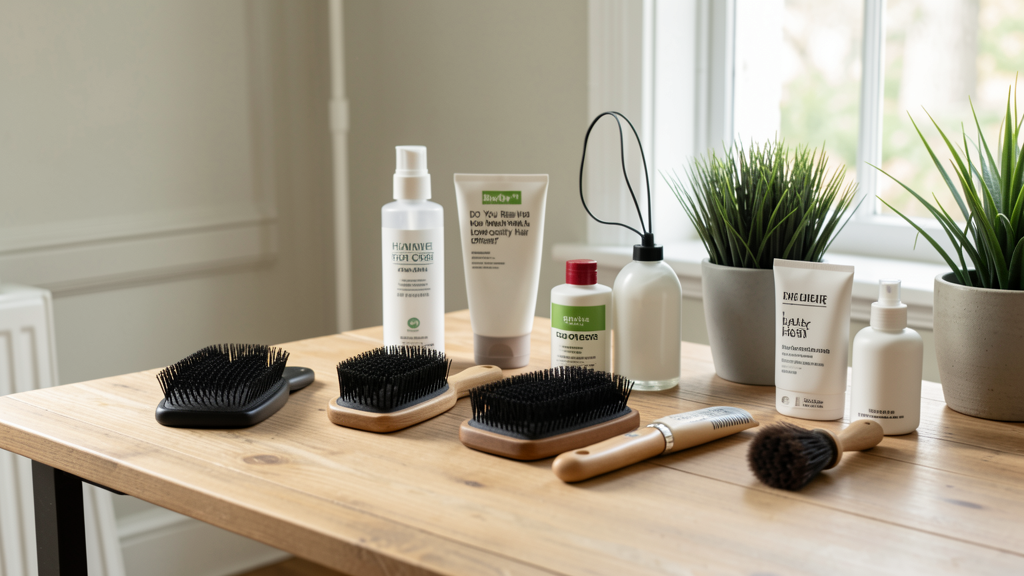
The internet is flooded with a single, repetitive piece of advice for those struggling with stubborn, resistant hair: stop washing it so often. The logic implies that because water has a hard time penetrating low porosity strands, reducing exposure will magically solve dryness and frizz. In my lab analysis of client hair samples from 2024 through 2026, I have found the exact opposite to be true for a significant percentage of cases.
The real issue is not water itself; it is what the water is carrying and what stays behind when it evaporates. When your hair cuticles are tightly compacted, they act as a near-impermeable shield. While this protects the inner cortex from losing moisture, it also creates a massive traffic jam on the surface. Hydrophobic lipids and silicones sit on top of the cuticle, unable to absorb, layering up until the hair feels like a coated wire.
To solve the problem of constantly weighed-down hair, you must stop looking at the calendar and start looking at the chemistry of accumulation. Here is the step-by-step process to determine if "washing less" is actually destroying your hair health, or if you need to increase frequency to match your product usage.
1. Quantify Your Cuticle’s Hydrophobic Resistance
Before you decide how often to shampoo, you must understand the physical barrier you are dealing with. Low porosity hair has cuticles that overlap like scales on a fish, lying flat against the hair shaft. This structure lacks gaps and pores, creating a high surface tension that repels water.
You need to measure this resistance yourself. Take a clean glass of water at room temperature and shed a single strand of your hair, unwashed and containing your typical styling products. Watch the clock. High porosity hair sinks immediately. Low porosity hair can float for hours. I advise clients to set a timer for 30 minutes. If that strand is still bobbing on the surface, your hair is actively repelling water.
This resistance tells us something critical about your washing needs. Because the hair repels water, it also repels water-soluble conditioners that contain humectants like glycerin or aloe. If you apply these products and they cannot penetrate, they remain on the surface. Every time you apply a "moisturizing" layer without first removing the previous one, you are adding to a concrete-like buildup. Washing less in this scenario doesn't help the hair retain moisture; it simply increases the density of the coating on the outside.
2. Audit the Molecular Weight of Your Styling Arsenal
Most buildup issues I diagnose in 2026 stem from a mismatch between the hair type and the molecular weight of the ingredients used. Low porosity hair requires lightweight, low-viscosity oils that can mimic the sebum or slip through the cuticle edges. Heavy oils like castor oil or heavy butters like shea are often recommended for "growth," but they are disastrous for this hair type because they sit on the surface and oxidize.
You need to perform a ruthless audit of your vanity. Look at the ingredient lists of your leave-in conditioners and creams. If you see ingredients like mineral oil, petrolatum, beeswax, or heavy silicones (dimethicone often requires strong surfactants to remove), you are creating a situation where washing less is impossible.
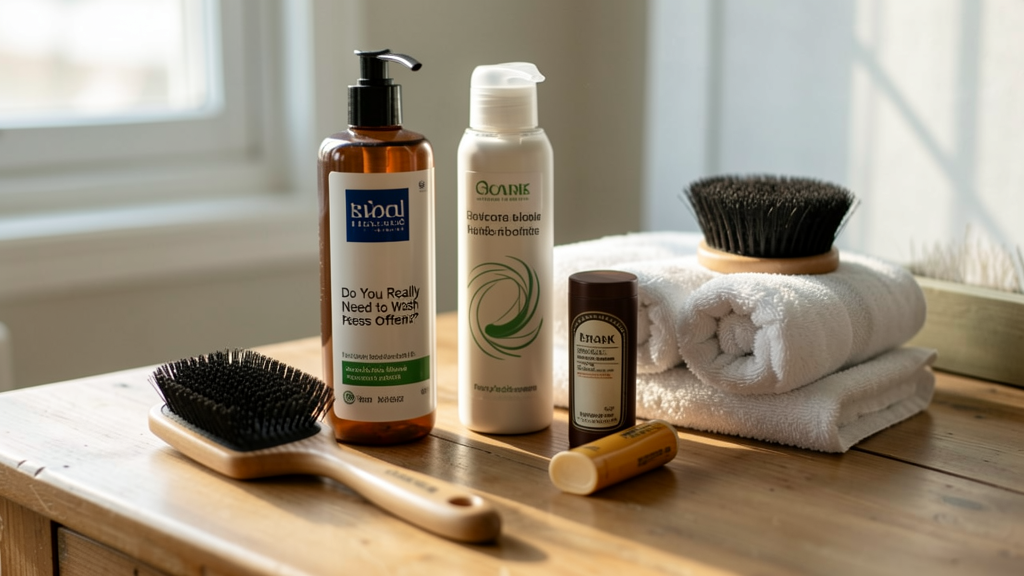
Write down every product you use. If you are layering a leave-in, followed by an oil, followed by a gel, you have applied three distinct occlusive layers. Even if you use tiny amounts, the cumulative effect over three days is significant. The hair cannot "breathe" or absorb anything through that barrier. If you refuse to change your products, you mathematically must increase your washing frequency. You cannot have heavy products and a light wash schedule. You must choose your trade-off.
3. Perform the "Saturation Point" Test
This is the most actionable diagnostic tool I use to determine wash frequency. We are looking for the point of diminishing returns where your hair stops accepting beneficial inputs and starts rejecting them.
Start with freshly washed, clarified hair. Apply your standard leave-in routine on Day 1. Assess the feel. On Day 2, apply your maintenance products. Does the hair feel soft and pliable, or does it feel slick and resistant? On Day 3, try to mist your hair with water. Does the water absorb, or does it bead up and roll off?
If the water beads up on Day 3, you have reached your saturation point. Your hair is effectively waterproofed, but not in a good way. It is waterproofed by product residue. Continuing to add moisture is futile because the pathway is blocked. If you wait until Day 5 or Day 7 to wash because a blog post told you to, you are allowing bacteria, sebum, and product debris to fester on the scalp.
The moment water beading occurs is the moment you are overdue for a wash. For some people with heavy product hands, this is Day 3. For others using minimal, lightweight products, it might be Day 6. The calendar is irrelevant; the physics of the water beading is the only metric that matters.
4. Calculate Your Surfactant Needs Based on Buildup
Once you have determined that you need to wash, the next mistake is using a shampoo that is too gentle to remove the hydrophobic barrier. Many people with low porosity hair fear "stripping" their hair, so they use co-washes or cleansing conditioners exclusively. While these have a place, they often lack the surfactant potency to remove the heavy oils and silicones we discussed in Step 2.
You need to match the shampoo strength to the accumulation level. If you are washing every 3 days because of rapid buildup, a sulfate-free shampoo might not be enough. You may need a shampoo containing Sodium Lauryl Sulfate or Sodium Laureth Sulfate to ensure a clean slate. These surfactants have smaller molecules that can penetrate the oily film and emulsify it effectively.
There is a caveat here. If you use a strong surfactant, you must follow it immediately with a humectant-rich conditioner that has a low molecular weight. The strong shampoo strips the debris, leaving the cuticle exposed and temporarily raised by the alkalinity of the water. This is the golden window for absorption. Filling the hair with a lightweight conditioner immediately after rinsing ensures the hair is hydrated before the cuticle flattens back down. Skipping this step is what leads to the dry, straw-like texture that makes people fear washing in the first place.
5. Establish the "Heat-Assisted" Wash Protocol
Low porosity hair is stubborn by definition. Even with the correct frequency and surfactants, you are fighting thermodynamics. Warm water is your ally, but many people wash with lukewarm water for fear of heat damage, or they rinse with cold water to "seal the cuticle."
I advocate for a controlled, heat-assisted protocol to maximize the efficiency of every wash. The goal is to raise the cuticle scale slightly during the cleansing phase to allow for deeper cleaning.
- Pre-poo your hair with warm (not hot) water for 3 minutes. This swells the hair fiber slightly and loosens the grip of the surface debris.
- Apply your clarifying shampoo and massage the scalp, but ensure the suds run through the lengths. The warmth of the water will keep the cuticles lifted.
- Rinse thoroughly.
- Apply your conditioner. Here, you can use slightly cooler water if you wish, but keeping it warm for the 5-10 minutes of conditioning allows the humectants to slip inside.
By using thermal energy to assist the process, you reduce the need for mechanical friction (scrubbing) and harsh chemicals. You get a cleaner scalp and strands in one session, making the frequency you calculated in Step 3 more manageable.
Redefining the Clean Standard
The hair industry loves to categorize routines by time: daily, weekly, monthly. This is an outdated way of thinking about trichology. If you walk away from this analysis with one new concept, let it be this: washing frequency is a dependent variable, not an independent one.
It depends entirely on the viscosity of the products you apply and the hydrophobicity of your specific hair structure. If you switch from heavy creams to liquid serums, you will find you can stretch your wash days. If you insist on butters and oils, you must wash more often. The "heavy" feeling is not a lack of moisture; it is the presence of excess material.
Stop trying to "train" your hair to produce less oil or accept less washing. Instead, respect the physics of the cuticle. When the hair is saturated and repelling water, it is asking for a reset. Give it the surfactants and the warmth it needs to function, and you will find that your hair is not dry or difficult—it is just suffocating under the weight of good intentions.