
Buildup or Dandruff? The Definitive Symptom Check for 2026
Stop wasting money on medicated shampoos when the real issue is cosmetic accumulation; learn to differentiate residue from skin conditions.

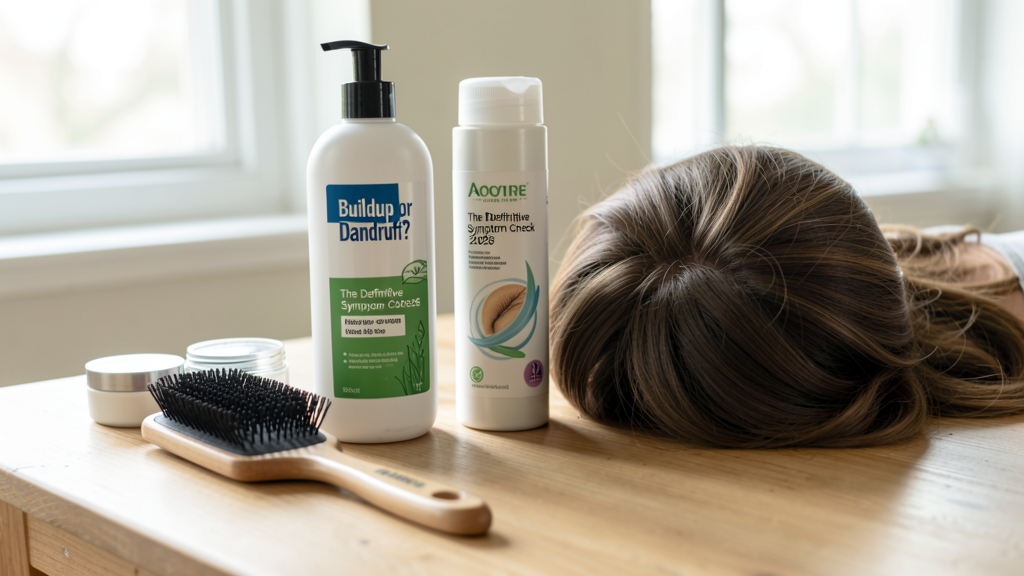
You grabbed the clinical-strength bottle with the promise of total relief. You followed the instructions, lathered, waited the prescribed three minutes, and rinsed. Forty-eight hours later, your shoulders are dusted white again. The frustration is palpable, but the error is likely diagnostic. In 2026, we are seeing a surge in what I call "cosmetic misdiagnosis"—treating heavy accumulation of styling agents and hard water minerals with fungicides designed for Malassezia globosa.
The consumer dilemma is straightforward: flaky scalp that persists despite using anti-dandruff treatments. To solve this, we must stop looking at the flakes as the enemy and start analyzing the soil they grow in. This is not just about cleanliness; it is about chemistry. Differentiating between product accumulation and a dermatological condition requires a decision matrix based on visual and tactile evidence.
Analyzing the Debris: Waxy Clumps vs. Dry Snowflakes
The first and most immediate criterion for decision-making is the physical structure of the substance falling from your head. Dandruff, medically known as seborrheic dermatitis, consists of skin cells that have sloughed off prematurely. These cells are typically dry, white or greyish, and small. When you crush them between your fingers, they disintegrate into a fine powder, much like dry snow.
Conversely, scalp buildup often presents as plate-like clusters. If you examine the debris closely and notice yellowish, irregular plaques that feel sticky or waxy to the touch, you are likely looking at a mixture of sebum and insoluble silicones. Common ingredients like dimethicone and amodimethicone are hydrophobic. While excellent for smoothing the cuticle, they bind to the scalp and trap environmental particulates. If the flakes slide off the hair shaft in whole pieces rather than crumbling, your problem is accumulation.
The Itch Spectrum: Surface Tingling vs. Deep Inflammation
Subjective sensation is a powerful diagnostic tool, provided you pay attention to the quality of the discomfort. Dandruff is an inflammatory response. The itch associated with seborrheic dermatitis is often deep, boring, and accompanied by redness or heat. It is an immune response to the yeast population on the scalp.

Buildup creates a different sensation. It is often described as a "tingling" or a feeling of heaviness and pressure. This occurs because the accumulated layer of polymers and oils is occluding the follicle, preventing the skin from breathing. You might feel a vague need to scratch, but it is less about an inflammatory reaction and more about the physical presence of a foreign layer on the skin. If the itch subsides immediately after scratching but returns as soon as the scalp dries, you are dealing with residue rather than a systemic skin issue.
Location, Location, Mapping the Patches
Distribution patterns offer the third critical data point. Seborrheic dermatitis has a predilection for areas rich in sebaceous glands. It typically concentrates symmetrically along the hairline, behind the ears, and at the nape of the neck.
Buildup, however, respects no anatomical symmetry. It accumulates where you apply product. If you notice heavy residue concentrated at the crown—where many people apply volumizing sprays—or in distinct bands where styling creams were worked through the hair, the evidence points to cosmetic origin. Furthermore, if the flakes appear to be physically glued to the hair shaft itself rather than sitting loosely on the scalp, it is almost certainly product residue. Hard water minerals like calcium carbonate can also create a distinct "scale" that feels rough to the touch and is distributed uniformly across the scalp, unrelated to sebaceous gland density.
The Styling Paradox: Heavy Roots and Matting
Performance issues during styling often reveal the truth before the scalp does. If you find that your hair feels heavy at the roots within hours of washing, or if it mats and clumps together in unnatural ways, accumulation is the culprit. Many modern styling products, particularly those containing "film-forming" polymers like PVP/VA copolymer, build up incrementally. Each wash adds a layer if your shampoo is not surfactant-strong enough to remove it.
This creates a vicious cycle. You feel the roots are heavy, so you apply dry shampoo to absorb the oil. The dry shampoo, often starch-based, mixes with the existing polymers to create a cement-like paste. You then wash it out with a gentle, sulfate-free shampoo designed to preserve color, which fails to emulsify the paste. The result is a scalp that feels dirty even when wet.
The Wash Cycle Reaction: Immediate Relief vs. Temporary Calm
The final test is the timeline of relief. When you use a medicated anti-dandruff shampoo containing zinc pyrithione or ketoconazole, you are targeting a biological organism. It takes time for the inflammation to subside and the cell turnover to normalize. You rarely see a 100% improvement after a single wash.
Conversely, if your issue is buildup, the right clarifying treatment yields immediate results. A wash with a shampoo containing a higher concentration of surfactants like Sodium Lauryl Sulfate or a chelating agent like EDTA will lift the debris instantly. If you step out of the shower and your scalp feels significantly lighter, "breathes" better, and the flaking stops for several days, you have confirmed the diagnosis. The problem was mechanical, not biological. This distinction is crucial because using harsh medicated shampoos on dry scalp caused by buildup can strip necessary lipids and exacerbate the issue.
The Verdict: Choosing Chelation Over Medicated Shampoos
Based on the criteria above—the waxy texture of flakes, the lack of deep inflammation, the asymmetrical distribution, and the immediate response to strong surfactants—the decision for most persistent "flakers" in 2026 should be clear: you need a detox, not a cure.
My professional recommendation is to cease the use of anti-dandruff treatments immediately if you recognize the signs of buildup. Incorporate a chelating shampoo into your routine once every two weeks. Look for formulations that list disodium EDTA or phytic acid high up on the ingredient list to tackle hard water minerals. Follow this with a moisturizing conditioner only on the mid-lengths and ends to avoid re-soiling the scalp. If you follow this protocol for three weeks and the flaking persists, only then should you consider consulting a dermatologist for potential psoriasis or dermatitis. Do not treat a plumbing problem with medicine. Clear the drain first, then assess the system.
This approach aligns with broader hair health goals. Just as The 'Dusting' Technique to Remove Split Ends targets specific damage to preserve length, clarifying targets specific residue to preserve scalp health. Additionally, understanding your hair's porosity plays a role; those with low porosity hair are actually more prone to buildup because the cuticle lies flat, making it harder for ingredients to penetrate—and harder to wash out.
Ultimately, a healthy scalp is not necessarily one that never produces oil, but one that effectively regulates it. Accumulation disrupts this regulation by suffocating the follicle. By mechanically removing the barrier, you allow the scalp to return to its natural equilibrium, often solving the mystery of the eternal flakes without ever needing a prescription.
Read next
Do You Really Need to Wash Low Porosity Hair Less Often?
Why your washing schedule should depend on saturation levels rather than calendar days for low porosity hair.

Dusting 101: The Secret to Removing Split Ends Without Losing Length
Learn the precise art of dusting to snip away damaged tips along the hair shaft while keeping your hard-earned length intact.