
Why Does My Ponytail Give Me a Headache?
Understanding the specific nerve response triggered by tension at the temples can save you from migraines while keeping your style intact.

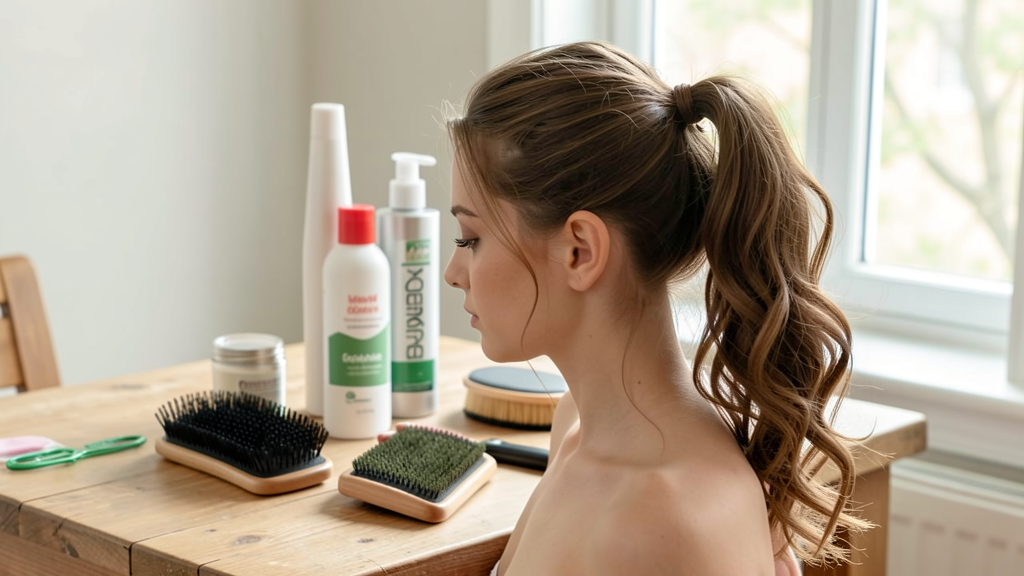
There is a distinct kind of exhaustion that sets in around 4:00 PM on a Tuesday, unrelated to your workload or the hours of sleep you managed to get the night before. It radiates from the hairline, wrapping around the skull like a vice that tightens every time you turn your head. This is not a sinus infection or a caffeine crash; it is the physiological cost of aesthetic ambition.
Most of us, myself included, chase the "slicked-back" look popularized on the runways of early 2026. We want that clean, face-lifting effect that comes from dragging every strand of hair into a high, gravity-defying ponytail. However, the pain that follows is rarely discussed in the tutorials. We treat the headache as a tax we must pay for looking polished. It is not a tax; it is a warning signal from your nerves telling you that the mechanical load you have applied exceeds your scalp's tolerance.
The medical community refers to this as "ponytail headache," but that generic label misses the precise mechanism at play. To fix the problem without abandoning the style, we have to look past the elastic band and focus on a very specific area of tension: the temples.
The Anatomy of External Compression
The scalp is not just a canvas for styling; it is a densely woven network of connective tissue and sensory nerves. When you secure a ponytail, you are applying mechanical traction to the dermis. While the hair shaft itself has no nerve endings, the follicles are deeply embedded in the skin and connected to the supratrochlear and auriculotemporal nerves. These sensory nerves are particularly sensitive around the forehead and the temporal region—the area just above and in front of your ears.
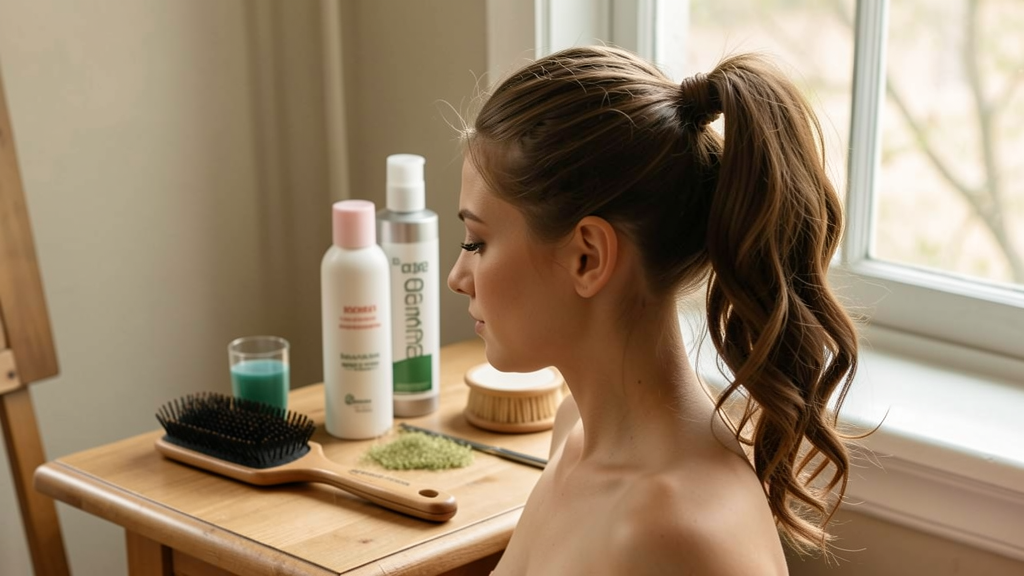
When you gather your hair into a high pony, the tension vector pulls directly toward the crown. If the style is too tight, this pull displaces the scalp tissue slightly backward. This displacement stretches the connective tissue over the temporalis muscle and compresses the nerves. The brain interprets this sustained compression as external head pain. It is an allodynia response, meaning a stimulus that is not normally painful—pulling hair—becomes painful due to the intensity and duration of the stimulation.
I see this frequently in the salon. A client will request a "gym-proof" updo, asking for it to be so tight it doesn't move for three days. By the time I finish the blowout, they are already wincing. They often mistake this for sensitivity, but it is actually inflammation caused by the restricted blood flow to the perifollicular area. The nerve response is immediate, but the headache often has a latency period, kicking in forty-five minutes to an hour after the styling is complete.
The Leverage Problem of High Elevations
Physics is the unspoken enemy of the high ponytail. The higher the pivot point—meaning the closer the elastic is to the crown—the longer the lever arm becomes. Your hair acts as a weight. Even if you have fine hair, the cumulative weight of the strands creates a downward force. When the ponytail is low, at the nape of the neck, the weight pulls downward parallel to the spine, which the neck muscles are designed to support.
When the ponytail is elevated to the top of the head, the weight pulls perpendicular to the scalp. This creates significant torque. To keep that style from drooping, you have to secure the elastic with immense force. This is where the traction nerve response is triggered. You aren't just fighting gravity; you are fighting the leverage of your own hair length.
This is compounded by the accessories we use. In 2026, we are seeing a return of oversized plastic claws and metal coils. While trendy, these tools often concentrate that pulling force into a smaller surface area than a soft scrunchie, increasing the pressure per square inch on the temporal nerves. If you must use these tools, the placement needs to shift drastically.
Is It Just Tension, or Is It Inflammation?
We need to distinguish between the ache that goes away when you let your hair down and the pain that lingers. If you remove your elastic and the headache vanishes instantly, you experienced a mechanical traction response. The nerves were simply pinched. However, if the pain persists for hours after removal, you have induced mild inflammation in the connective tissue (the galea aponeurotica).
Repeatedly styling your hair this tight can lead to chronic sensitization. I had a client last month, a corporate lawyer named Sarah, who wore a high ponytail every single day. She came in complaining of migraines that medication wouldn't touch. Upon examination, her temporal area was tender to the touch even without styling. We had to put her on a "low-tension detox" for two weeks—loose braids only. The difference was profound. The migraines subsided because the nerves were finally allowed to stop firing distress signals.
This chronic pulling can also lead to traction alopecia, a form of hair loss caused by constant tension on the roots. If you notice your hairline receding slightly or the hairs at the temples breaking off, your headache is the symptom of a structural damage problem.
Redesigning Your High-Upswept Silhouettes
The solution is not to stop wearing ponytails. As a stylist, I would never tell you to abandon a silhouette that frames your face so well. The solution is to change the architecture of the ponytail to relieve the temporal nerves. You need to decouple the tension from the hairline.
Instead of dragging the hair back from the front hairline with a brush until it is painful, try the "Root-Float" method. Gather your hair as if you were making a ponytail, but before you tie it, use your fingers to gently lift the roots at the front and sides by about two millimeters. Secure the elastic while holding that slight elevation. This tiny gap creates a buffer zone. It prevents the scalp from being pulled taut against the skull, significantly reducing nerve compression while maintaining the visual of a clean style.
Another effective strategy is the split-anchor technique. Many people rely solely on the elastic to hold the weight of the hair. This places 100% of the load on the scalp skin. Instead, use bobby pins to anchor the tail of the ponytail to the head. You can see the mechanics of this in our guide on Step-by-Step: How to Lock Bobby Pins So Your Updo Doesn't Slump. By pinning the tail to the crown, you offload the weight from the elastic. The ponytail becomes an illusion—the hair looks up, but the scalp is bearing very little actual weight.
Furthermore, reconsider the preparation of the hair. We often think that brushing the hair aggressively helps to smooth it into a ponytail. However, vigorous brushing creates static and tangling that we then have to force into the elastic. The myth that brushing 100 strokes makes hair shinier encourages this rough handling. Instead, use a smoothing serum or a light pomade to control the cuticle before you brush, allowing you to gather the hair gently without needing to tug at the roots to smooth bumps.
The "Root-Float" Method in Practice
Let’s get specific about the application of the Root-Float. This is my go-to technique for editorial shoots where the model needs to hold a pose for hours without wincing in pain.
- The Placement: Do not place the ponytail at the very apex of the skull. Move it one inch down towards the occipital bone (the bump at the back of the head). This small shift changes the angle of pull, moving it away from the sensitive temporal nerves.
- The Tension Control: Secure the hair with a "loose first loop." Wrap the elastic around the hair once, but do not pull it tight. Leave the ponytail sitting low on the wrap.
- The Micro-Adjustment: Grip the ponytail and push it upward toward the crown to your desired height. You will see the hair at the roots rise slightly. Stop pushing before you see the forehead skin wrinkle or pull.
- The Lock: Twist the elastic a second time to lock it in this elevated position. The elastic is now holding the hair up, not pulling the scalp back.
This technique prioritizes the position of the hair mass over the tightness of the grip. You achieve the aesthetic benefit of a high ponytail—exposing the neck and lifting the cheekbones—without the mechanical violence to the nerve endings.
Listening to the Warning Signals
We often view pain as a weakness or a side effect of beauty standards. There is a strange badge of honor some clients wear, bragging that their updo is so tight it hurts. I correct this immediately in my chair. If your head hurts, the style has failed, regardless of how good it looks in the mirror.
The traction nerve response is a sophisticated biological mechanism designed to protect you from damage. When that signal fires, it means the blood flow is restricted and the nerves are irritated. Ignoring it doesn't make you tougher; it just sensitizes your nerves to the point where even a loose braid might start triggering pain later on.
By adjusting the tension vectors and utilizing support structures like bobby pins rather than brute force, you can keep the high ponytail in your rotation. It is about engineering the hairstyle to work with your physiology rather than against it. True style is effortless; it should never feel like you are in a battle with your own biology.
Read next

The Counter-Intuitive Twist: Locking Bobby Pins Against Gravity
A technical breakdown of the friction method and 180-degree rotation that keeps updos intact for over 12 hours.
The 100-Stroke Myth: Why Excessive Brushing Is Destroying Your Cuticle Integrity
Why the old advice of nightly 100-stroke sessions is mechanically damaging your hair’s cuticle layer and causing breakage instead of shine.