
Scalp Scrubs vs. Exfoliating Shampoos: Choosing Between Granule Friction and Chemical Dissolution
Stop scratching your scalp raw; discover why chemical exfoliation often outperforms physical scrubs for dissolving flakes without compromising the skin barrier.
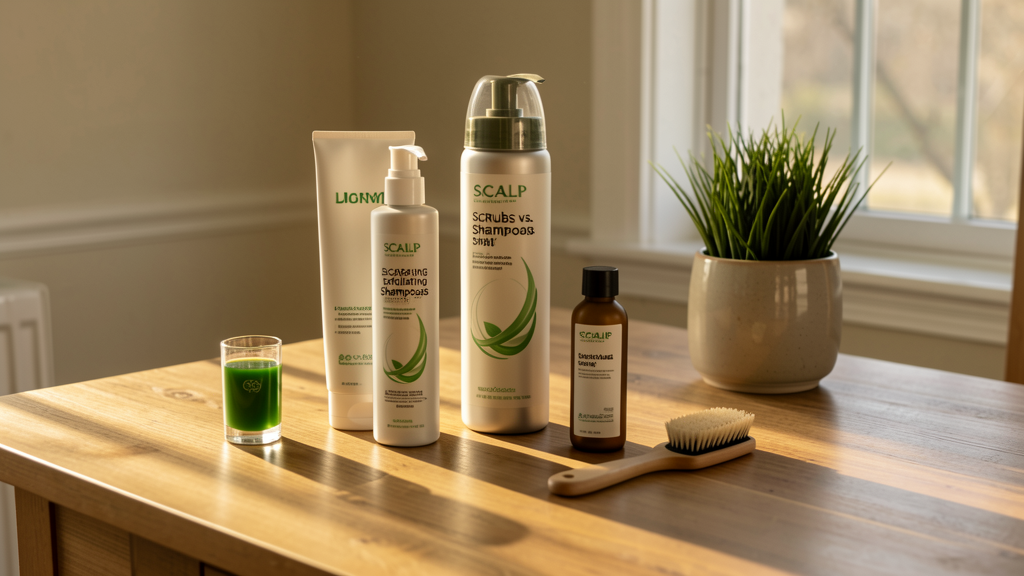
The sheer frustration of brushing dark hair onto a black shirt only to see a dusting of white flakes is universal. In my years analyzing cosmetic formulations, I have seen the industry swing wildly between gritty jars of sea salt and clinical bottles of acid-based toners. The confusion is understandable. Both promise the same result—a flake-free scalp—but their mechanisms of action are fundamentally opposite. One relies on mechanical force to shear away dead skin, while the other uses chemical reactions to dissolve the intercellular "glue" holding those cells together.
For anyone dealing with persistent itchiness or visible dandruff, the instinct is often to grab the most abrasive scrub available. It feels satisfying, like sanding down a rough piece of wood. However, the scalp is not lumber; it is living tissue with a fragile microbiome. Choosing incorrectly can turn a manageable flake issue into a chronic inflammatory condition. We need to look past the marketing and examine the cosmetic chemistry to decide which method truly serves your scalp health without causing damage.
The Mechanics of Physical Scrubs: Abrasion and Risk
Physical exfoliation works through friction. Scalp scrubs typically utilize granules such as sea salt, sugar, walnut shells, or synthetic polyethylene beads to physically dislodge dead skin cells, known as corneocytes, from the stratum corneum. When you massage a scrub into your roots, the jagged edges of these particles act like tiny shovels, lifting debris and product accumulation from the skin’s surface.
The immediate gratification is undeniable. You can feel the granules working, and the scalp often feels tingly and clean post-rinse. For someone with heavy product buildup—think dry shampoo, clay, or heavy styling pomades—a physical scrub is occasionally necessary. It provides the sheer mechanical force required to break down polymer films that water alone cannot dissolve.
The problem lies in the lack of control. The pressure applied during a massage varies wildly, and the granules themselves are inconsistent. A 2018 study highlighted that irregularly shaped exfoliants, like crushed walnut shells, can cause micro-tears in the epithelium. These microscopic wounds disrupt the skin barrier function, allowing pathogens to enter and moisture to escape. If you are dealing with inflammation rather than just buildup, scrubbing is essentially scratching an open wound. It aggravates the nerve endings, increasing blood flow and itching, which traps you in a vicious cycle of scratching and flaking.
Furthermore, physical scrubs are often formulated with high levels of surfactants to ensure the granules rinse out cleanly. This can strip the scalp of its natural lipids, leaving the skin dry and tight. If you are unsure whether your scalp issue is biological (dandruff) or environmental (buildup), check 5 Signs Your Scalp Has Buildup (Not Just Dandruff) before deciding on a scrub.
Chemical Exfoliation: Dissolution at a Molecular Level
In contrast to the brute force of scrubs, exfoliating shampoos utilize hydroxy acids or enzymes to chemically dissolve the desmosomes—the protein structures that bind skin cells together. This process, known as desmolation, allows the dead skin to shed naturally and evenly without the need for friction.
The two primary classes of acids used in scalp care are Alpha Hydroxy Acids (AHAs) and Beta Hydroxy Acids (BHAs). Glycolic and lactic acids (AHAs) are water-soluble and work on the skin's surface, ideal for hydrating and smoothing the scalp texture. Salicylic acid (BHA) is lipid-soluble, meaning it can penetrate deep into the pore follicles to dissolve sebum and debris. For flaky roots caused by seborrheic dermatitis or excess oil, salicylic acid is vastly superior to a salt scrub because it cuts through the oil layer to exfoliate underneath.
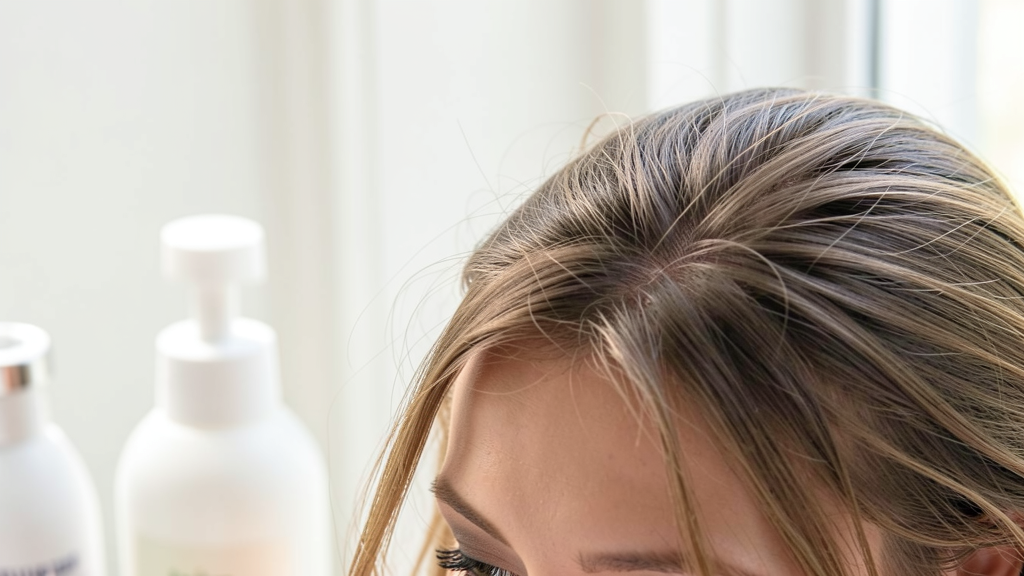
Modern formulations in 2026 have refined this approach significantly. We are now seeing "polyhydroxy acids" (PHAs) like gluconolactone entering the scalp care market. These have a larger molecular size than AHAs, meaning they penetrate the skin more slowly and cause significantly less irritation while still offering effective exfoliation. This is a game-changer for sensitive scalps that cannot tolerate the stinging often associated with glycolic acid.
The primary advantage here is precision. A chemical exfoliant works uniformly. It does not rely on your hand pressure or the shape of a bead. It simply reacts with the skin chemistry. By lowering the pH of the scalp temporarily to between 3.5 and 4.0, these acids optimize the enzyme activity responsible for natural cell turnover. This method respects the integrity of the barrier while clearing the follicles. To understand how this process interacts with your hair's natural protection, you must understand what sebum actually does for the hair shaft.
Why Friction Often Exacerbates the Flakes
A critical mistake many make is assuming that all flakes need to be "scrubbed off." If your flakes are caused by a compromised barrier—perhaps from over-processing or harsh sulfates—introducing physical abrasion is the worst possible decision. The stratum corneum is already struggling to maintain cohesion; scrubbing accelerates its shedding, resulting in even more visible flakes a day or two later.
This phenomenon is often mistaken for product failure. Users scrub, see a clean scalp, and then experience a rebound effect where the skin produces excess oil to compensate for the stripped barrier, leading to more sticky flakes. The chemical route avoids this rebound inflammation. Enzymes, such as papain from papaya or bromelain from pineapple, offer a gentle alternative to acids. These proteolytic enzymes digest the keratin protein in dead skin cells, essentially "melting" the flakes away. They are exceptionally gentle and work effectively at a neutral pH, making them perfect for those who find acids too drying.
We must also consider the tactile sensation. Scrubs encourage you to dig in with your fingernails. Dermatologists universally agree that fingernails should never be used on the scalp, as they introduce bacteria and cause trauma. A chemical shampoo encourages the use of finger pads to massage the solution in, which is mechanically beneficial for circulation without the risk of abrasion. If you struggle with a burning or irritated scalp, my experience the month I quit sulfates to fix my burning scalp demonstrates how removing irritants is often more effective than adding friction.
The Verdict: Prioritizing Barrier Integrity
After years of reviewing ingredient lists and analyzing clinical data, my stance is clear: chemical exfoliation is the superior choice for the vast majority of flaky scalp conditions. It treats the root cause—cell retention and follicle blockage—rather than just attacking the symptom (the visible flake).
Physical scrubs have a very narrow use case. They are appropriate for someone with a healthy, non-inflamed scalp who uses heavy styling products weekly. In that specific scenario, a gentle, round-bead scrub (never jagged salt or nut shells) used once every ten days can help prevent product buildup. But for the daily battle against dandruff, dryness, or itchiness, chemical dissolution is the only path that restores long-term health.
The future of scalp care is not about "scrubbing away the bad" but about "optimizing the cycle." Your scalp skin naturally renews itself every 28 days. When we use harsh physical scrubs, we are forcing this cycle to speed up artificially through trauma. When we use chemical exfoliants, we are supporting the skin's natural desire to shed. This distinction is the difference between a temporary fix and a permanent solution.
Optimizing Your Routine with Mechanical Assistance
Abandoning the scrub jar does not mean you must abandon physical manipulation entirely. Manual stimulation is vital for blood flow and follicle health. The trick is to decouple the exfoliant (the chemical doing the work) from the massage (the physical stimulation).
Once you have applied a chemical exfoliating shampoo and allowed it to sit for the recommended dwell time—usually three to five minutes—you can perform a rigorous massage using only your fingertips. This mechanical action helps dislodge the now-loosened cells and improves circulation without tearing the skin. It is the best of both worlds. You get the tactile satisfaction of a scalp treatment combined with the scientific efficacy of chemical exfoliation.
For those looking to perfect this technique, I recommend integrating this step-by-step scalp massage technique for blood circulation into your wash day. The combination of a chemical loosening agent and proper manual manipulation will clear the roots far more effectively than any scrub could, all while leaving your protective barrier intact.
The Final Takeaway on Flaky Roots
Ultimately, the goal is not just a clean head for one evening; it is a balanced scalp environment that can sustain healthy hair growth for years. We must stop viewing our scalps as dirty surfaces that need vigorous scouring and start treating them as the delicate, living organ they are. By choosing chemical dissolution over physical abrasion, you are not just cleaning your hair; you are actively repairing the ecosystem of your skin. As we move further into 2026, the industry consensus is shifting heavily toward barrier-preserving actives, leaving the abrasive scrubs as a relic of a less informed era.
Read next
Buildup or Dandruff? The Definitive Symptom Check for 2026
Stop wasting money on medicated shampoos when the real issue is cosmetic accumulation; learn to differentiate residue from skin conditions.
The Month I Quit Sulfates to Fix My Burning Scalp: A 30-Day Inflammation Log
Tracking my scalp's journey from chronic stinging and redness to a balanced barrier by strictly eliminating sulfates for 30 days.