
Managing the Line of Demarcation: 18 Months of Transitioning Without Cutting
A detailed breakdown of blending relaxed roots with natural ends without the big chop, focusing on structural integrity and styling mechanics.

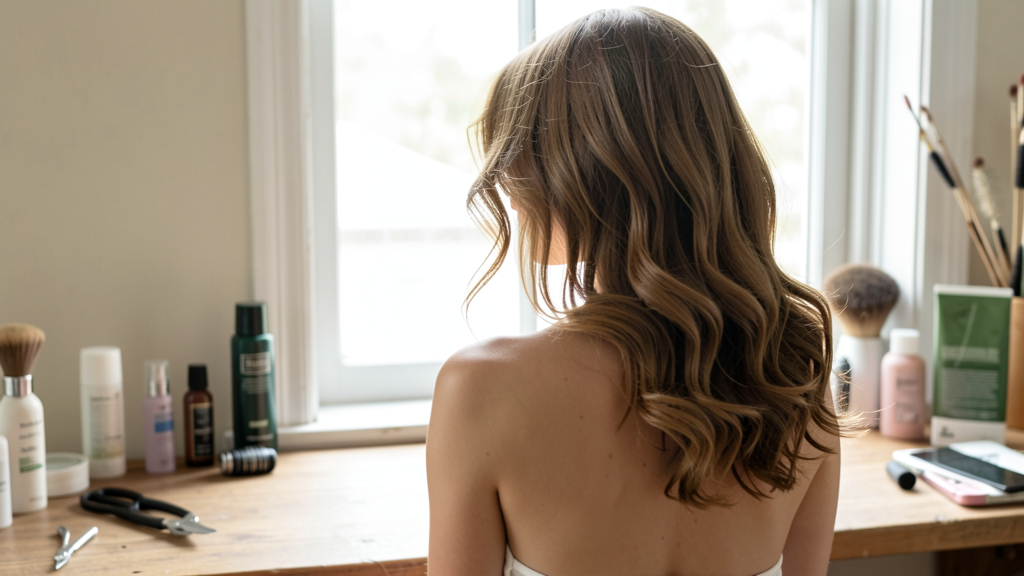
On November 14, 2024, I applied a relaxer to my hair for the very last time. I didn't know it was the last time at the moment; I simply sat in the chair, let the chemicals process, and left with bone-straight strands. By February 2025, the decision was made: I was going natural. But there was a catch—I have severe cutting anxiety. The "Big Chop" was not an option for me. I needed to grow out my natural hair while retaining the length I had spent years cultivating.
What followed was an 18-month experiment in mechanical stress management and cosmetic chemistry. I wasn't just dealing with two different hair types; I was managing a structural fault line where the strong, disulfide-bond-rich natural hair met the chemically weakened relaxed ends. Most transitioners cut early because the breakage at this "line of demarcation" becomes unbearable. I managed to stop it entirely without trimming a single inch until my natural texture was long enough to cut the relaxed ends myself in April 2026.
Here is exactly how I styled two opposing textures for a year and a half without losing my length to breakage.
The Structural Weakness of the Demarcation Line
Before discussing styling techniques, we have to address the physics of the transition. The line of demarcation is the point where your natural curl pattern meets the processed, straight hair. According to principles of cosmetic chemistry, the relaxer breaks the disulfide bonds in the hair's cortex permanently. The new growth, however, retains its natural bond structure.
The problem is tensile strength. Your natural hair is generally stronger and more elastic. The relaxed hair is porous and slightly less elastic due to the chemical alteration. Where they meet, you have a stress point. If you put a brush through that intersection while dry, the natural hair coils and shrinks, but the straight hair does not. The tension snaps the weaker point—almost always the relaxed hair just below the root, or the natural root snapping off due to the weight of the ends.
To survive 18 months, I had to treat this line like a fragile piece of antique glass. This meant eliminating all mechanical manipulation on dry hair. Zero. I realized that my breakage wasn't happening in the shower; it was happening at 7:00 AM when I tried to detangle a bedhead that had matted the two textures together overnight.
Why I Abandoned the Denman Brush for Six Months
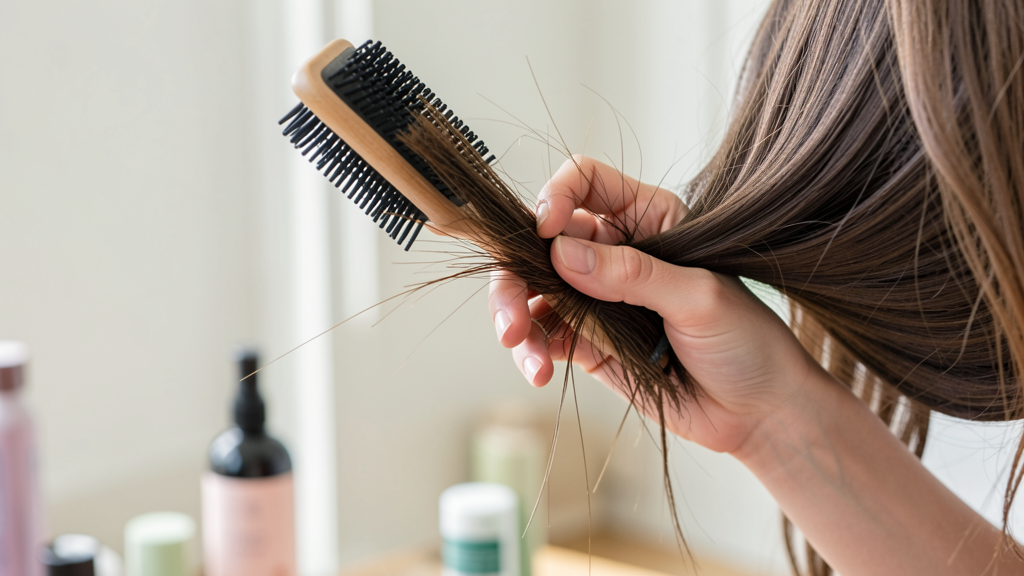
In the past, I swore by my Denman brush for smoothing my edges and defining my curls. During the transition, however, it became a liability. The bristles were too stiff for the fragile intersection point. I found that the tight rows of the brush would grab the curly root and the straight end simultaneously, pulling them in opposite directions. The result was a shower floor full of hair strands with white bulbs—traction alopecia waiting to happen.
I switched exclusively to finger detangling with a heavy slip conditioner. This was a non-negotiable rule. I only used my fingers to separate the tangles, starting from the tips and working my way up to the roots. I allowed the conditioner to sit on my hair for at least 20 minutes under a steam cap to soften the cuticle.
I revisited the debate of tools vs. fingers frequently. While I eventually reintroduced a wide-tooth comb for the very ends of my hair after month 8, I kept the Denman locked away until the relaxed ends were barely 2 inches long. The strategy relied on reducing friction. As I analyzed in my comparison of Denman Brush vs. Wide-Tooth Comb: Which Defines 4C Curls Better?, the tightness of the bristles creates distinct tension that transitioning hair cannot sustain.
The Blending Technique: Roller Sets on Damp Hair
The visual aspect of transitioning is often the most discouraging. You have a curly, frizzy halo at the roots and pin-straight, sometimes lifeless ends. It looks messy rather than intentional. To avoid this awkward aesthetic without using heat (which would have fried the demarcation line), I relied on wet-setting on magnetic rollers.
I washed my hair once a week, usually on Sundays. After applying a leave-in conditioner and a strong holding gel—avoiding the myth that wavy hair needs gel to survive humidity, as I explain here, but using gel here for structural hold—I rolled my hair.
The key was the size of the rollers. I used medium-sized mesh rollers, not the large jumbo ones. The goal was to create a curl pattern that mimicked a loose blowout. By rolling the straight roots together with the relaxed ends, I forced both textures to dry in the same curvature.
- The Process: I sectioned the hair into four quadrants.
- The Application: I applied the setting lotion from root to tip, smoothing the natural root downward to blend it with the straight end.
- The Dry Time: I sat under a hooded dryer for 45 minutes. Air drying was not an option because the two textures dry at different rates, leading to puffiness at the root while the ends remained damp.
When I took the rollers out, I had a uniform, wavy/curly texture. It looked like a roller set done on natural hair. There was no obvious "line" because the curl pattern was artificial and consistent from root to tip.
Protective Styling Without Tension
For the days when I couldn't manage a roller set, I relied on protective styles. However, most transitioners make the mistake of getting box braids or sew-ins that are installed too tightly on the fragile hairline. Since my hair texture was a mix of Type 4 roots and Type 1 ends, the weight of synthetic hair caused immediate stress.
I stuck to tension-free styles, primarily "chunky" flat twists that I pinned up into a bun. I did not braid down to the very ends of the hair. I left the last two inches of the relaxed ends loose and tucked them inside the bun. This protected the oldest, most weathered part of my hair while the stronger root was secured by the twist.
I was extremely selective. If a stylist wanted to pull my edges tight to make the style look "sleek," I walked out. Protecting the fine edges was critical because the demarcation line was weakest at the nape and the temples. I kept these styles in for a maximum of 7 days to prevent buildup, which can cause dryness and breakage when you try to wash it out later.
The Financial and Emotional Trade-off
Transitioning without a cut is not just a physical challenge; it is a test of patience. You are essentially carrying dead weight. The relaxed ends do not have a cuticle layer that functions optimally; they absorb moisture quickly but lose it just as fast.
During this 18-month period, I saved roughly $120 per month. I stopped paying for relaxer applications, trims, and styling services. That is over $2,000 saved. However, I reinvested a significant portion of that money into products. I needed deep conditioners with hydrolyzed proteins to temporarily patch the cuticle of the relaxed hair, and heavy oils to seal moisture.
The trade-off was time. My wash day went from 45 minutes to 3 hours. I had to be meticulous. There was no "wash and go." Every style required planning, sectioning, and gentle handling.
The Final Cut and Realization
By April 2026, my natural hair was about 6 to 7 inches long. The relaxed ends were still hanging on, but they were drastically thinner than the voluminous roots. The "see-through" effect was becoming impossible to hide, even with roller sets.
I finally cut the relaxed ends off myself in my bathroom. The result was a shock. I had assumed my natural hair would be a certain texture based on the new growth. But without the weight of the relaxed hair pulling it down, my natural hair shrank significantly more than I anticipated. It was shorter, but it was thick, shiny, and uniquely mine.
The 18-month journey taught me that hair care is 90% maintenance and 10% styling. I learned to respect the structural limits of my hair. The line of demarcation is not a barrier; it is a reminder of the healing process. By treating the transition as a chemistry problem rather than a styling emergency, I managed to retain length that most people lose to impatience. If you are facing this dilemma, know that the awkward stage is temporary, but the health you preserve by slowing down is permanent.
Read next

Denman Brush vs. Wide-Tooth Comb: Which Defines 4C Curls Better?
Achieving smooth, uniform clumps on 4C hair requires a specific mechanical approach, and the choice between dense bristles and wide teeth determines whether you get definition or volume.

5 Protective Styles That Don't Tangle Fine Edges
Five specific updo techniques designed to redistribute mechanical stress away from the temporal hairline, preventing traction alopecia while maintaining length retention.